


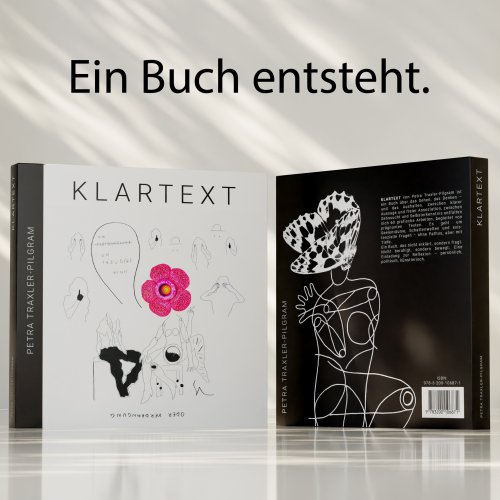
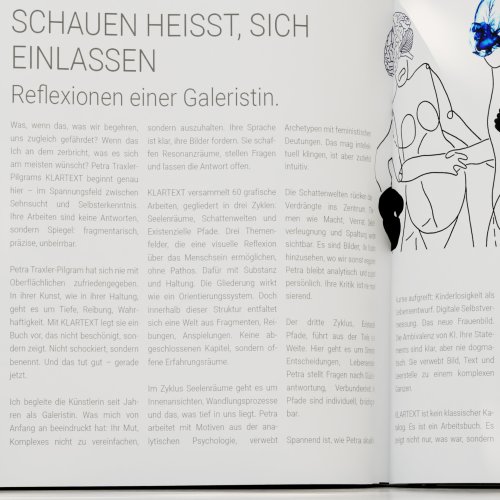
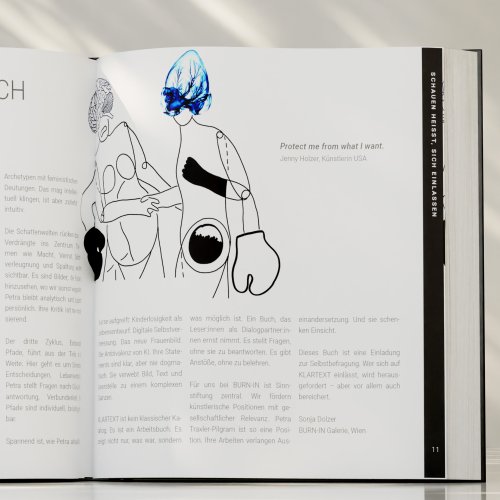
For Petra Traxler-Pilgram, BURN-IN developed KLARTEXT, a book that brings work, language and artistic attitude into an editorial form - precisely designed, condensed in terms of content and conceived as an independent resonance space between art and reflection.
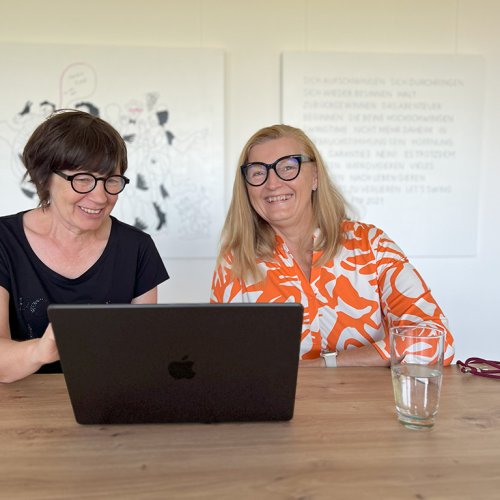
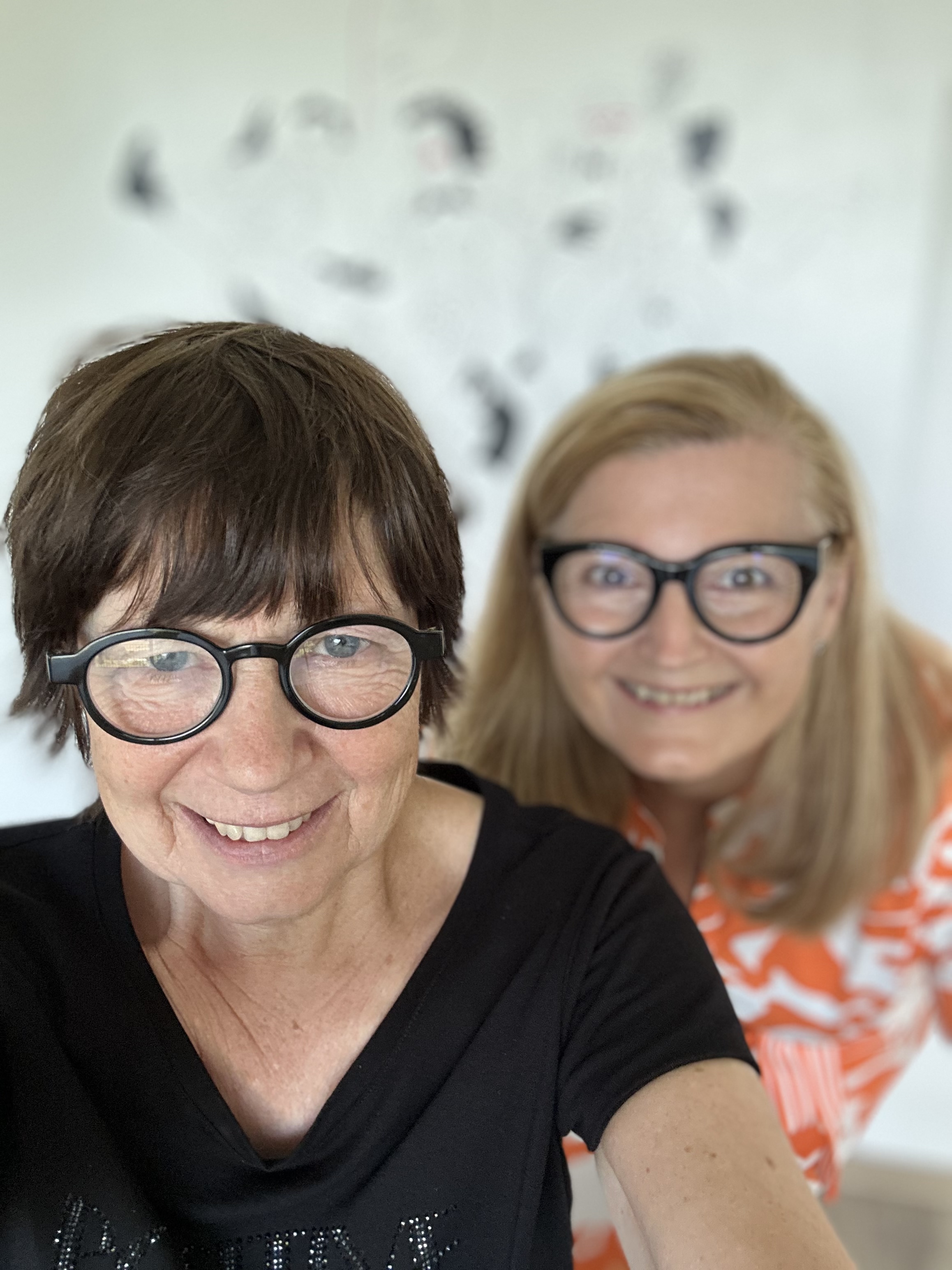
Three months. Three minds. One goal: to make art visible - and tangible. Petra Traxler-Pilgram (artist), Lukas Dolzer (designer) and Sonja Dolzer (gallery owner) have jointly created a book that oscillates between thinking and feeling. KLARTEXT as an artistic-literary statement.
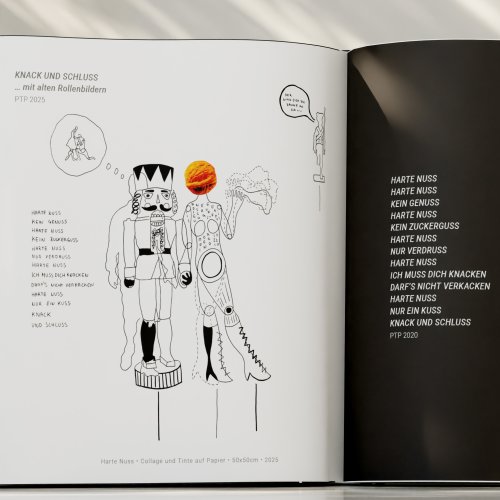
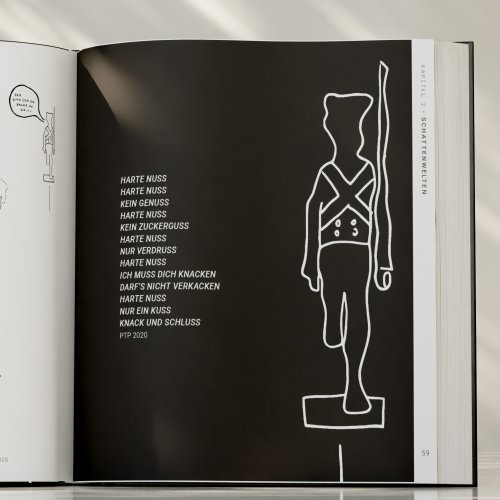
Petra Traxler-Pilgram shows 60 graphic works from three cycles (Seelenräume, Schattenwelten, Existenzielle Pfade) and "refines" them with personal texts. Sonja Dolzer wrote the introductory essay "Looking means getting involved" - reflections of a gallery owner on perception, depth and the courage to be uncomfortable. Lukas Dolzer provides the visual backbone with a clear layout.
Art historian Gabriele Baumgartner broadens the view with the article "Seeing and reading. Readable images - visible thoughts" - an analytical counterpoint to the sensual world of images and texts.
The result is a book that asks questions rather than providing answers. It moves, not calms. Plain text - in terms of content and emotion. KLARTEXT is not a book that explains - it asks questions. It does not reassure - it moves. If you want KLARTEXT, you have to endure ambivalence - which is exactly what this book does.
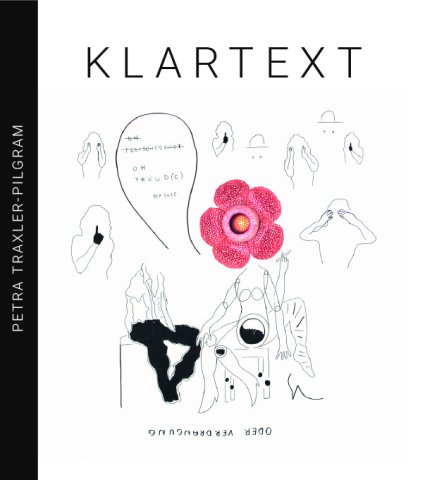
KLARTEXT was created where image, language and design do not explain each other, but sharpen each other - until the work becomes a form that dares to be clear and retains ambiguity.
Inspired?
Artist's book with its own attitude
LARTEXT was developed as an independent thought and image space - not as an accompanying product, but as an editorial setting.
Three cycles, one condensed body of work
Soul spaces, shadow worlds and existential paths are guided in such a way that inner references, breaks and transitions can be read.
Image and language in dialog
Personal texts by the artist and Sonja Dolzer's essay open up a space in which work, attitude and reflection mutually sharpen each other.
Design as a supporting structure
Lukas Dolzer's layout creates clarity, rhythm and a form that gives the work precision without restricting it.
Journalistic form with depth of focus
Gabriele Baumgartner's contribution adds context, resonance and art-historical connectivity to the book.