
Floral aesthetics meets culture-driven management
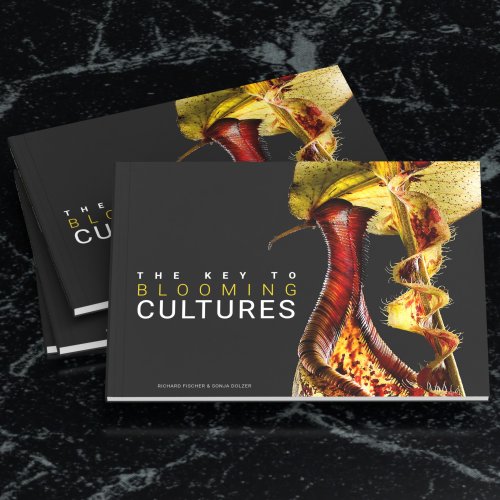
With The Blooming Codec, BURN-IN is developing a book together with Richard Fischer that brings art, culture, sustainability and management into a strong, sensually charged form - as a thinking space for companies, organizations and new blooming visions of the future.
Richard Fischer and Sonja Dolzer dive into the floral worlds of the photo artist and discuss the secrets of value-based, meaningful management.
BLOOMING CODEC - a contemporary cultural and environmental manifesto for culture-driven management for sustainable growth & floral sculptures as a symbol for change.
The project by Richard Fischer and Sonja Dolzer interweaves art, science and philosophy and also dares to experiment with combining a highly aesthetic, emotionalizing art book with a factual non-fiction book (CSR, CCR, culture-driven management, sustainability...). The BLOOMING CODEC manifesto describes opportunities and connections for newly emerging flourishing cultures with a focus on companies and organizations.
Seven hypotheses for shaping a flourishing future:
- Culture & nature color & shape our planet | they form the most valuable legacies for successor generations
- The triad of art, science and philosophy as a constant for the constant reshaping of "flourishing" cultures
- The iceberg as a symbol of our culture
- The reflection on the Antropocene as a survival program and as the basis for a meaningful, wait-based culture
- Floral sculptures as a symbol of sustainable change
- Culture-driven management for sustainable growth | Return on culture | culture as an asset | economy as a carrier of culture | tangible and intangible values | cultural heritage. intangible values | cultural heritage
- Blooming Codec - encoded secrets of nature | cultural change
The Blooming Codec shows how art, attitude and strategic condensation can result in a book that not only conveys content but also has a cultural impact.
Background
In early 2020, at the beginning of the COVID crisis, the virtual paths of contemporary photo artist Richard Fischer and gallery owner and marketing expert Sonja Dolzer crossed for the first time.
Although the two protagonists seem to come from diametrically opposed worlds, they sensed and recognized the shared visionary DNA and the enormous potential that could develop from a sustainable collaboration right from the start. In the spirit of co-evolution, a term from the theory of evolution that describes the mutual adaptation of strongly interacting species. Within a few weeks, the interdisciplinary vision of pairing contemporary floral photographic art with systemic management and focusing on culture, social responsibility and sustainability took shape in order to inspire society and innovative organizations to act sustainably.
This is by no means a cautionary tale. Rather, they communicate with stakeholders in a positive, very sensual, aesthetic and at the same time fact-based way, addressing the conscious and unconscious in line with the classic iceberg model of interpersonal communication.
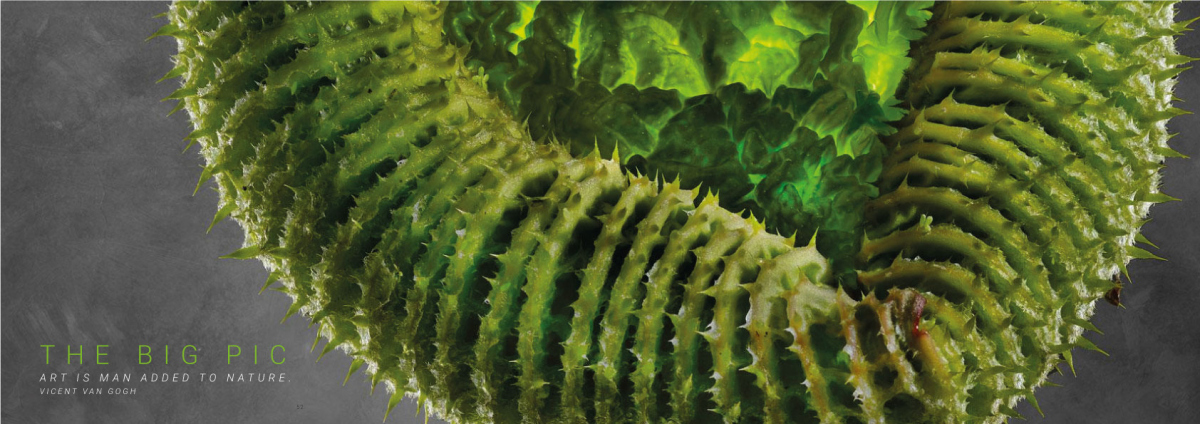
The joint manifesto THE BLOOMING CODEC invites you on a challenging expedition into these natural and cultural worlds, which are only superficially highly diverse. Fischer and Dolzer purposefully walk along a new, as yet unknown culture/nature path and develop sustainable approaches for innovators and lateral thinkers who are willing to change. With the power, beauty and resilience of nature and the systemic management approach, they elevate the big picture (BIG PIC) to a new level and create a sustainable understanding of nature and culture for organizations - wonderful, unique structures that reveal a lot in common on closer inspection. The incomparable sensual beauty of nature meets strikingly independent micro and macro cultural worlds that need to be deciphered by the stakeholders. An exciting journey full of identity and meaning begins.
Authors
Richard Fischer, the internationally acclaimed photo artist and Ambassador of Flowers, has been focusing on contemporary conscious interaction for decades, emphatically and symbolically staging floral sculptures throughout their entire life cycle. Many of these species are threatened with extinction and are on the IUCN Red List. With his cultural interaction, he delivers his personal, artistic statement and thus a profound reflection on the Anthropocene. His mission: to create awareness, promote sustainable action and thus shape a new understanding of culture.
Sonja Dolzer has been working at the interface between business and art for over 10 years. In her scientific work Return on Culture, she deals with the effects of art in organizations and regions and describes the long-term effects on society, companies (employees, customers, stakeholders) and countries. With BURN-IN Galerie.Agentur, the business economist established a think, do and sense factory for artists, companies, municipalities and art collectors in 2009, which sets trends and has mutated into a game changer. Her mission: GreenART paired with strategic management brings about lasting change through the meaningful process, creating central assets and culture-driven change. Floral sculptures as a symbol of change.
Your idea calls for a book?
What makes this project special
A book between art and management
The Blooming Codec combines aesthetic photographic art with topics such as sustainability, cultural change, CSR and value-based management.
Floral imagery as a model for thought
Richard Fischer's works are made legible as symbols of resilience, change and new cultural images of the future.
Journalistic consolidation with BURN-IN
The concept, storytelling and strategic framing are developed in such a way that an interdisciplinary book format is created from a context of works.
Seven hypotheses for flourishing crops
The project formulates its own thinking model for companies and organizations that combines art, science and philosophy.
The project formulates its own thinking model for companies and organizations that combines art, science and philosophy.
The book is an example of how central themes and attitudes can be translated into a strong, aesthetically and substantively sustainable form.